What is an Anaerobic Digester?
An anaerobic digester (AD) is a system designed to break down organic material, such as food waste, agricultural residue, or sewage, in the absence of oxygen. This process, called anaerobic digestion, occurs naturally in environments where oxygen is limited, such as in swamps, landfills, and the digestive systems of animals. Anaerobic digesters are used in waste management and renewable energy production, as they convert organic waste into biogas, which can be utilised as a valuable source of energy1.
How Do Anaerobic Digesters Work?
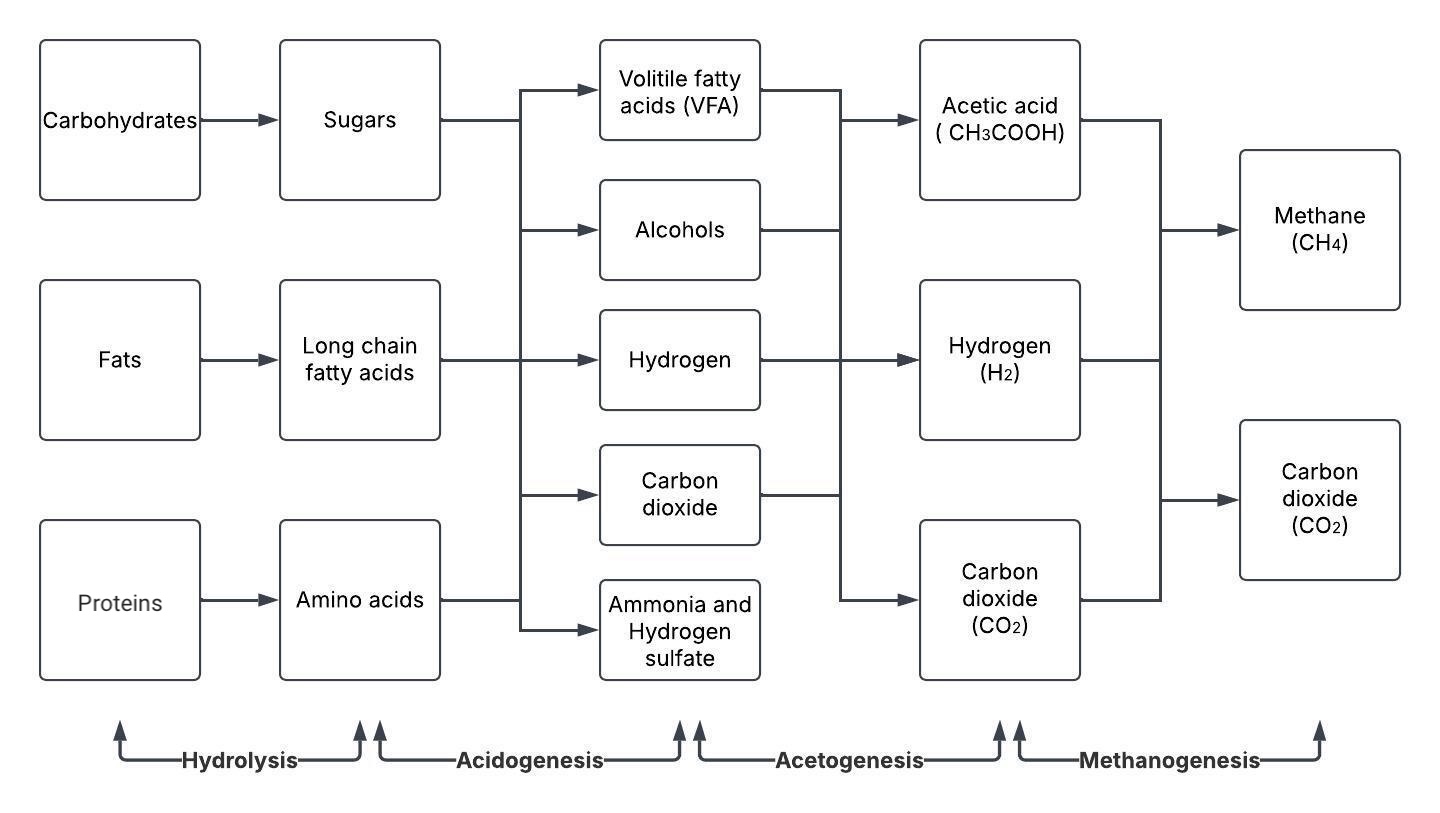
Anaerobic digesters create a controlled environment where microorganisms (microbes) break down organic matter in the absence of oxygen. The process happens in several stages:
- Hydrolysis
Larger organic molecules like carbohydrates, fats, and proteins are broken down into more simple and soluble molecules such as sugars, amino acids, and long chain fatty acids by hydrolytic bacteria2.
- Acidogenesis
These smaller molecules are further broken down by acid-producing, fermentative bacteria. They produce volatile fatty acids, alcohols, hydrogen, and carbon dioxide. This is also the stage where the by-products of ammonia and hydrogen sulphate are produced in small quantities3,4.
- Acetogenesis
The products of acidogenesis are transformed into acetic acid, hydrogen, and carbon dioxide by acetogenic microbes2.
- Methanogenesis
Finally, methanogenic archaea (microbes) convert the products of acetogenesis into methane and carbon dioxide, which form the biogas2.
Important Parameters in Anaerobic Digestion
Several parameters are important to monitor to ensure the optimal performance and prevent any problems with an anaerobic digester:
Temperature
Digesters can operate at psychrophilic (<20°C), mesophilic (25–40°C) or thermophilic (50–60°C) temperatures. In general, as the temperature increases, the speed of digestion increases, however each operating temperature has costs and benefits1.
Thermophilic temperatures promote more efficient and effective digestion, increased removal of pollutants, and efficient sterilisation of digestate5,6. However, thermophilic temperatures require more energy, can be more prone to problems, and are more sensitive to temperature changes. Mesophilic temperatures are the most common and balance efficiency with operational stability. Psychrophilic temperatures are slower and less efficient but are suitable for colder environments with low volumes of feedstock or in situations where maintaining higher temperatures is impractical.
pH
The pH of the digester should remain within the range for methane production (pH 5.5-8.0) but is optimal between pH 7.0-8.01. The pH level in an anaerobic digester is mostly controlled by a natural buffering system that helps balance acids and bases in the liquid. This system keeps the pH stable based on factors like the amount of CO2 and other substances in the digestate. However, if too much acid or base builds up, the system can’t keep up, and the pH can change rapidly, which could stop the digestion process. Because of this, pH alone isn’t a reliable way to monitor how well the anaerobic digester is functioning.
Volatile fatty acids (VFA)
VFA are intermediate compounds produced during acidogenesis. A build-up of intermediaries such as VFA in the digester are an indication that there is instability in the anaerobic digestion process1.
Ammonia
High ammonia levels, particularly in its free (NH3) form, can inhibit the anaerobic digestion process, so it’s important to keep ammonia concentrations below 80 mg/l1. The concentration of free ammonia increases with temperature, meaning the risk of inhibition is higher in anaerobic digestion systems operating at thermophilic temperatures. The primary source of ammonia in anaerobic digestion are proteins and urea7.
Macro and micronutrients
The ratio of carbon, nitrogen, phosphorus, and sulphur (C:N:P:S) must be balanced for optimal microbial growth, the optimal ratio is considered to be 600:15:5:1 1. An imbalance can lead to inefficient digestion and lower biogas yields. In addition to this Microelements (trace elements) such as iron, nickel, cobalt, selenium, molybdenum, or tungsten are equally important for the growth and survival of the AD microorganisms.
Components of an Anaerobic Digester
An anaerobic digester consists of several key components that work together to create the ideal environment for the digestion process. These components help to control the input, regulate microbial activity, and extract the outputs. The main components include:
Digestion Tank (Reactor)
This is the core component where the anaerobic digestion process occurs. It is typically a large, sealed container that keeps the organic material in an oxygen-free environment. The tank is often insulated to maintain a consistent temperature and prevent heat loss. Depending on the size and design, it can be a continuous or batch-fed system.
Feeding System
This component is responsible for introducing organic material (inputs) into the digester. It may include blenders, pumps, conveyors, or pipes to move waste into the reactor. The feeding system helps regulate the flow of material to ensure the digester operates at optimal conditions.
Stirring/Mixing System
To ensure that the organic material and microbes are evenly distributed throughout the digester, mixing, or stirring systems are used. This prevents the formation of clumps or uneven digestion, which can hinder biogas production. Common mixing techniques include mechanical mixers or gas recirculation (using biogas to stir the contents).
Gas Collection System
The biogas produced during digestion needs to be captured and stored. The gas collection system includes gas domes or covers that trap the biogas.
Waste Removal/Discharge System
After the anaerobic digestion process, the remaining solid or semi-solid material (digestate) needs to be removed. This is done through a discharge system, which may include conveyors, pumps, or other mechanisms.
Temperature Control System
Since anaerobic digestion is temperature-dependent, the system must maintain an ideal temperature range. Temperature control systems, including heating elements or heat exchangers, ensure that the digester remains at the optimal temperature.
pH Control System
Maintaining the pH level within the ideal range is crucial for microbial function. pH control systems, such as automated dosing of alkaline substances like lime or sodium hydroxide, help stabilize the environment in the digester, preventing the pH from dropping too low, which could inhibit the methanogens responsible for biogas production.
Monitoring and Control System
A central control system monitors key parameters such as temperature, pH, pressure, biogas production, and organic loading rate. Automated sensors, alarms, and data loggers are used to track the performance of the digester and make adjustments as needed to optimise the digestion process.
Inputs of an Anaerobic Digester
The inputs for an anaerobic digester typically include materials that are rich in organic carbon and serve as the food source for the microbes that drive the digestion process, such as:
Food waste
This includes scraps and un-eaten food from both home and professional kitchens. Additionally, this can also include food waste from vegetable and meat processing plants.
Agricultural waste
Agricultural waste includes any organic by-products that be created from the production of plant and animal products. This includes manure and wastewater from animal production; crop loss; and inedible organic material such as corn stalks etc.
Municipal waste
Municipal waste can include both sewage and organic waste collected by councils.
Energy crops
Energy crops are grown specifically for use in biogas (or some other energy production). Typically, these crops are maize and grasses.
Industrial waste
Industrial waste has some crossover with food waste; however this category also includes industries that create organic waste unrelated to food production (such as paper production).
Outputs of an Anaerobic Digester
The outputs of an anaerobic digester are:
Biogas
Primarily composed of methane (CH₄) and carbon dioxide (CO₂), biogas can be used to generate electricity, heat, or even processed into biomethane (renewable natural gas).
Digestate
A nutrient-rich solid or semi-solid by-product, digestate can be used as a fertilizer or soil conditioner in agriculture.
Conclusion
Anaerobic digesters are vital systems in the modern approach to waste management and renewable energy production. By shifting organic waste flows from landfill and efficiently breaking it down, they provide a sustainable method of producing biogas and reducing greenhouse gasses, while also creating valuable by-products like digestate for use as fertilizer8. The integration of various components ensures the system operates optimally, leading to efficient waste conversion, energy recovery and a more efficient and circular economy.
References
1 Teodorita Al Seadi, D. R., Heinz Prassl, Michael Köttner, Tobias Finsterwalder, & Silke Volk, R. J. Biogas Handbook. (2008).
2 Christy, P. M., Gopinath, L. & Divya, D. A review on anaerobic decomposition and enhancement of biogas production through enzymes and microorganisms. Renewable and Sustainable Energy Reviews 34, 167-173 (2014).
3 Kamusoko, R., Jingura, R. M., Chikwambi, Z. & Parawira, W. in Handbook of Biofuels (ed Sanjay Sahay) 485-497 (Academic Press, 2022).
4 Ishak, M. A. M., Ani, A. Y., Syed Ismail, S. N. A., Ali, M. L. M. & Ahmad, R. in Value-Chain of Biofuels (eds Suzana Yusup & Nor Adilla Rashidi) 49-67 (Elsevier, 2022).
5 Gaballah, M. S. et al. A review targeting veterinary antibiotics removal from livestock manure management systems and future outlook. Bioresource Technology 333, 125069 (2021). https://doi.org/https://doi.org/10.1016/j.biortech.2021.125069
6 Kumar Khanal, S., Lü, F., Wong, J. W. C., Wu, D. & Oechsner, H. Anaerobic digestion beyond biogas. Bioresource Technology 337, 125378 (2021). https://doi.org/https://doi.org/10.1016/j.biortech.2021.125378
7 Chen, Y., Cheng, J. J. & Creamer, K. S. Inhibition of anaerobic digestion process: A review. Bioresource Technology 99, 4044-4064 (2008). https://doi.org/https://doi.org/10.1016/j.biortech.2007.01.057
8 Mancini, E. & Raggi, A. A review of circularity and sustainability in anaerobic digestion processes. Journal of Environmental Management 291, 112695 (2021). https://doi.org/https://doi.org/10.1016/j.jenvman.2021.112695