Wallaby Game Meat BMP Testing
Assessing the potential for converting game meat by-products, specifically wallaby waste streams, into renewable biogas for future anaerobic digestion project.
Type
Testing Results
Client Name
Lenah Game Meats
Location
Launceston, Tasmania, Australia
Results
Strong biomethane potential, providing a clear technical foundation for future on-site bioenergy infrastructure.
Project OVERVIEW
Lenah Game Meats is considering a sustainable solution to create value from these game meat wastes, reducing reliance on off-site disposal, and exploring renewable energy generation to align with long-term decarbonisation goals.
Before solution design, the organic biomass must be tested to ensure that there is sufficient energy potential to support the business case. Hart Bioenergy worked with RMIT University to test samples from Lenah Game Meats.
The Challenge
Game meat processing facilities generate high-strength organic waste streams, including paunch material, dissolved air flotation (DAF) sludge, and wash-down wastewater.
These wastes are costly to manage and can pose environmental and regulatory issues.
High-strength organic waste streams are traditionally difficult and costly to manage. For Lenah Game Meats, these wastes include meat residues and processing wastes from wild-harvested Bennett’s wallaby, possums, kangaroos, and deer.
The Solution
Using sample waste materials from Lenah Meats, and with support from RMIT University, Hart Bioenergy was able to complete comprehensive biochemical methane potential (BMP) testing.
The results demonstrated strong biomethane potential, providing a clear technical foundation for future on-site bioenergy infrastructure that could reduce waste disposal costs, lower emissions, and generate renewable energy for factory operations.
- One of the first structured BMP testing programs focused specifically on Australian game meat processing wastes
- Integration of academic research through RMIT with industry-led feasibility analysis
- Early-stage pathway toward circular bioenergy solutions for niche protein processing sectors
Energy Use & Outputs
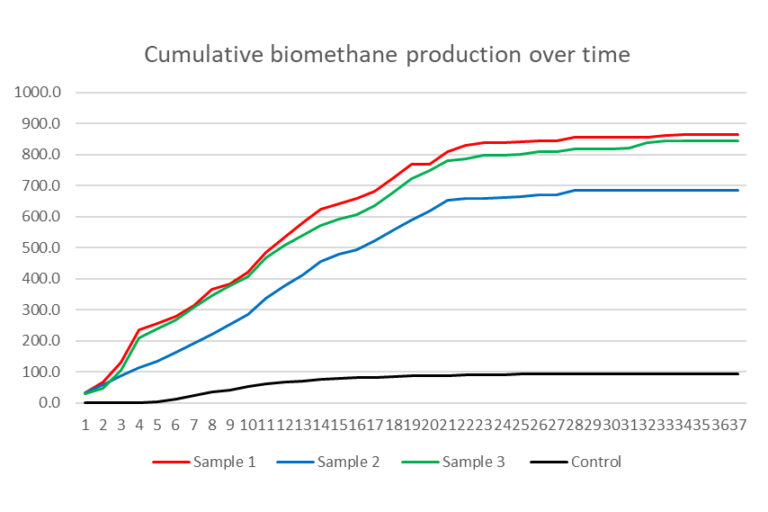
Cumulative production of biomethane (CH4) volume (cm3) over the course of testing for each of the samples and the control.

Technical Specifications
The Bennett’s wallaby is a smaller macropod species found wild in eastern mainland Australia and Tasmania. With a natural diet of grasses, roots, tree leaves, and weeds, wallaby meat is high in protein, nutrient-dense, and has a significantly lower carbon footprint than beef.
Benefits
- Modelling indicates that a future full-scale system could generate renewable electricity and heat for on-site use, helping offset facility energy demand while capturing methane that would otherwise contribute to greenhouse gas emissions.
- Digestate outputs may also be suitable for further processing into nutrient-rich soil amendment products, supporting agricultural reuse and further closing the nutrient loop on Lenah’s production cycle.
Other Recent Projects
From farms to food manufacturers, our biogas projects demonstrate how Australian businesses are transforming waste into valuable, renewable energy.
The Challenge
Game meat processing facilities generate high-strength organic waste streams, including paunch material, dissolved air flotation (DAF) sludge, and wash-down wastewater.
These wastes are costly to manage and can pose environmental and regulatory issues.
High-strength organic waste streams are traditionally difficult and costly to manage. For Lenah Game Meats, these wastes include meat residues and processing wastes from wild-harvested Bennett’s wallaby, possums, kangaroos, and deer.
The Solution
Using sample waste materials from Lenah Meats, and with support from RMIT University, Hart Bioenergy was able to complete comprehensive biochemical methane potential (BMP) testing.
The results demonstrated strong biomethane potential, providing a clear technical foundation for future on-site bioenergy infrastructure that could reduce waste disposal costs, lower emissions, and generate renewable energy for factory operations.
- One of the first structured BMP testing programs focused specifically on Australian game meat processing wastes
- Integration of academic research through RMIT with industry-led feasibility analysis
- Early-stage pathway toward circular bioenergy solutions for niche protein processing sectors
Energy Use & Outputs
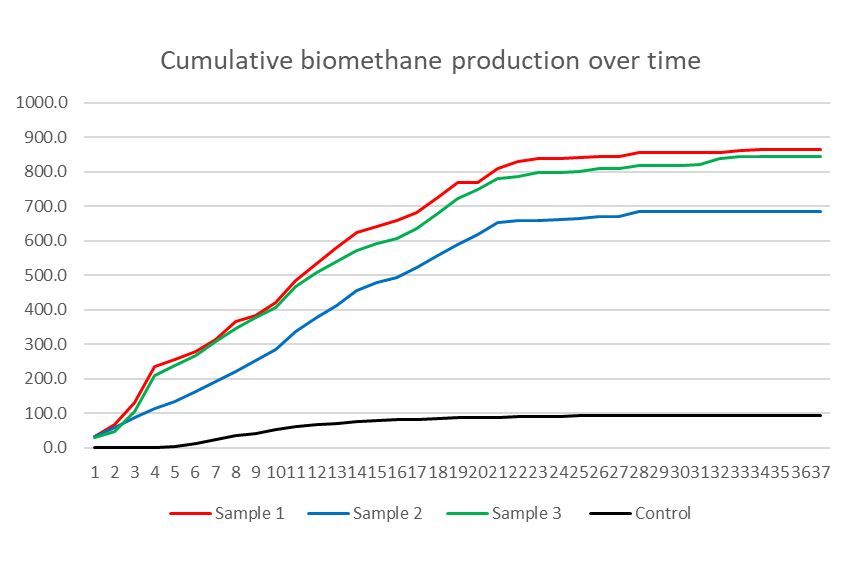
Cumulative production of biomethane (CH4) volume (cm3) over the course of testing for each of the samples and the control.
Benefits
- Modelling indicates that a future full-scale system could generate renewable electricity and heat for on-site use, helping offset facility energy demand while capturing methane that would otherwise contribute to greenhouse gas emissions.
- Digestate outputs may also be suitable for further processing into nutrient-rich soil amendment products, supporting agricultural reuse and further closing the nutrient loop on Lenah’s production cycle.