Dairy Farm Small Scale Anaerobic Digester
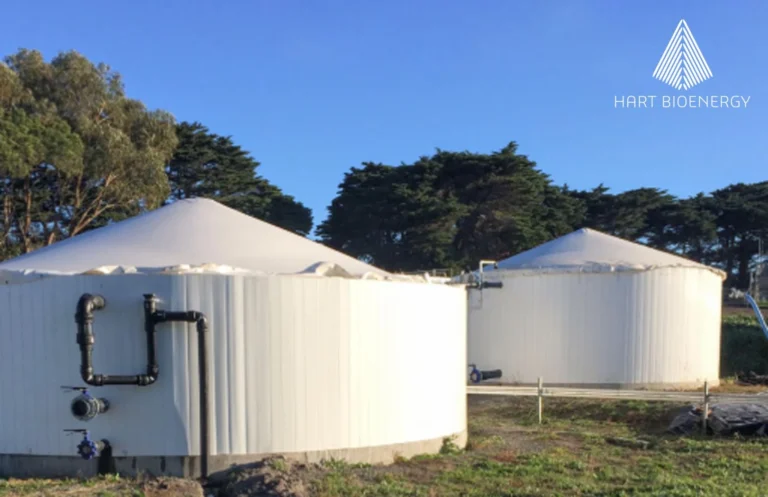
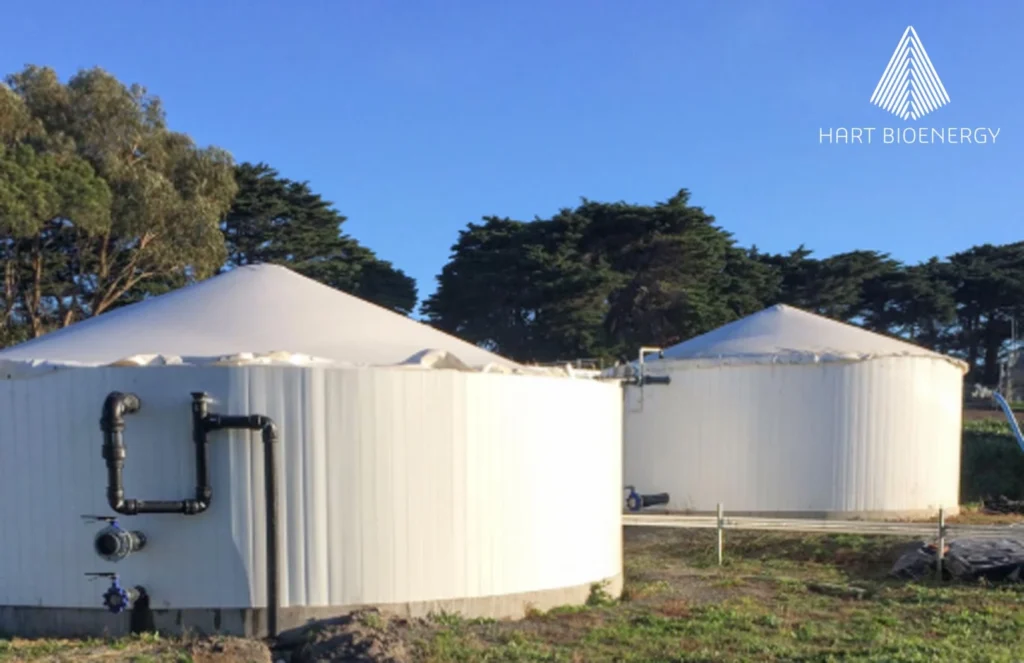
Hart Bioenergy delivered Australia’s first advanced small-scale anaerobic digester (SSAD) for a dairy farm in Warrnambool, Victoria.
Type
Biogas System
Year
November 2018
Location
Warrnambool, Victoria
Design Life
25 years minimum
Capacity
Stage 1: 150kL, Stage 2: 230kL
CHP
25kW Yanmar Biogas Micro CHP
Electricity Production
215,000 kWh/year
Thermal Energy
330,600 kWh/year
Slurry Volume
7,500–12,000 m³ cow slurry
Project OVERVIEW
Hart Bioenergy delivered Australia’s first advanced small-scale anaerobic digester (SSAD) for a dairy farm in Warrnambool, Victoria.
This pilot project demonstrates how biogas technology can turn agricultural waste into renewable energy, reduce farm operating costs, and create high-quality fertiliser products.
With an estimated ROI of just three years, the project sets a benchmark for future small-scale biogas adoption.
The Challenge
Dairy farms produce significant amounts of organic waste, particularly cow slurry, which is typically underutilised.
The challenge was to develop an on-site energy solution that could process these waste streams efficiently, offset farm electricity demand, and generate valuable by-products, all while being cost-effective and scalable.
With an estimated ROI of just three years, the project sets a benchmark for future small-scale biogas adoption.
The Solution
Hart Bioenergy, in partnership with the farm, EnviroMicroBio, and Southern Cross University, developed a two-stage Continuous Stirred Tank Reactor (CSTR) anaerobic digestion plant.
Stage one consists of a 150kL digester system, while stage two will expand capacity to 230kL with an additional high-efficiency bioreactor. The system processes 7,500–12,000 m³ of cow slurry annually, generating renewable electricity and heat via a Yanmar 25kW Micro CHP system.
Energy Use & Outputs
The farm currently consumes 110,000 kWh annually. The biogas system will supply this demand and export surplus electricity to the grid. Heat generated (330,600 kWh/year) maintains reactor temperature with potential future use in milk pasteurisation. The digested slurry is separated into solid and liquid fractions, producing nutrient-rich fertiliser.
Benefits
- Offsets on-site electricity demand and reduces farm energy costs
- Generates surplus electricity for the grid
- Produces high-quality organic fertiliser
- Reduces greenhouse gas emissions by capturing methane
- Demonstrates scalable, replicable biogas technology for Australian farms
Australian Firsts
- First operational SSAD dairy biogas system in Australia
- First advanced Yanmar Biogas Micro CHP
- First Octaform tank panel system in Australia (70% less concrete, integrated insulation)
- First Australian-made digester covers (Polyweld, VIC)
- First Jet Mix CSTR in Australia
Other Recent Projects
From farms to food manufacturers, our biogas projects demonstrate how Australian businesses are transforming waste into valuable, renewable energy.
The Challenge
Dairy farms produce significant amounts of organic waste, particularly cow slurry, which is typically underutilised. The challenge was to develop an on-site energy solution that could process these waste streams efficiently, offset farm electricity demand, and generate valuable by-products, all while being cost-effective and scalable.
The Solution
Hart Bioenergy, in partnership with the farm, EnviroMicroBio, and Southern Cross University, developed a two-stage Continuous Stirred Tank Reactor (CSTR) anaerobic digestion plant. Stage one consists of a 150kL digester system, while stage two will expand capacity to 230kL with an additional high-efficiency bioreactor. The system processes 7,500–12,000 m³ of cow slurry annually, generating renewable electricity and heat via a Yanmar 25kW Micro CHP system.
Energy Use & Outputs
The farm currently consumes 110,000 kWh annually. The biogas system will supply this demand and export surplus electricity to the grid. Heat generated (330,600 kWh/year) maintains reactor temperature with potential future use in milk pasteurisation. The digested slurry is separated into solid and liquid fractions, producing nutrient-rich fertiliser.
Benefits
- Offsets on-site electricity demand and reduces farm energy costs
- Generates surplus electricity for the grid
- Produces high-quality organic fertiliser
- Reduces greenhouse gas emissions by capturing methane
- Demonstrates scalable, replicable biogas technology for Australian farms
Australian Firsts
- First operational SSAD dairy biogas system in Australia
- First advanced Yanmar Biogas Micro CHP
- First Octaform tank panel system in Australia (70% less concrete, integrated insulation)
- First Australian-made digester covers (Polyweld, VIC)
- First Jet Mix CSTR in Australia